welcome to pathfinders
spacer image spacer image abstract divider
spacer image spacer image spacer image spacer image
Career Resource Center
More Resources
What Are My Talents?
What Am I Best At?  What Are My Natural Strengths?

If your answer to these questions is a shaky and expectant, "I wish I had some talent," you're more than likely cheating yourself. Yes, even if you can't sing, dance, draw, write, understand quantum physics, or talk to an audience you still have a chance to be brilliant. When asked to describe their strongest natural talents, I've heard a lot of super intelligent people say, "I've been dealt a loosing hand." Mainstream wisdom fools us into believing that the only the people with "real" talent are actors, film directors, writers, poets, artists, dancers, athletes, and supermodels. The good news is that everyone has inborn talent, and many of us have exceptional natural abilities. The objective of this column is to help you understand your inborn "talent" and inspire you to tap your deep well of natural potential.

Talent versus Skill


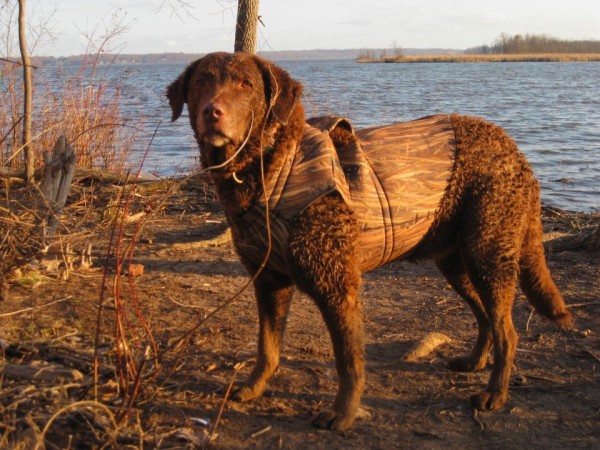
Talent is not a "learned" skill. This is a major distinction: you are born with talents, skills are what you learn along the way through life. Your talents come when the stork drops you off on the doorstep; it's your genetic endowment. They are your gifts; no learning required! So what about skills? Resumes are a laundry list of skills. Skills are like clothes, you can take them off like a smelly old sock, clean them up, or get new ones as needed. Conversely, inborn talents are with you for life; they don't change. My chocolate Lab Sydney was born with extraordinary natural talent at smelling her way around the neighborhood, she doesn't have to have a master's degree in aroma-science to be good at what she does. It just comes natural. Not using your talent is devastating to your well being, just as serious as covering your dog's nose with a really smelly sock and asking her to find her way home. Intuitively, people know they are born with natural proclivities. We can't help but notice the varying talents in our colleagues and friends; it's usually obvious who are the natural born politicians, comedians, problem solvers, tinker-masters, counselors, critics, and philosophers. Each of us has a unique blend of inborn abilities that make up a big part of our unique personhood.

Unless you have a trained eye, it's not easy to distinguish your natural talents from your learned skills. And, our special human ability to adapt and "learn" to survive in a variety of environments complicates this further--we can learn to do things that we have little or no natural talent for. I've met many people with a PhD in a career field that doesn't fit their strengths. This is like a squirrel getting a doctorate in climbing skyscrapers, they can "learn" to do it, but it's not much fun for them! To share a personal example, I was brilliant at surviving the skills required to be an electrical engineer. I was a genius at struggling, trying to get better where I had little to no natural ability. Engineering never came easy to me; I had to work thirteen times harder than my classmates to get a B average. Looking back, I was like that squirrel trying to make a living in the New York City. Just imagine a bunch of grumpy, highly over-educated squirrels riding the subway to work to climb skyscrapers in mid-town Manhattan. You can bet those squirrels are dreaming of going to work in Central Park, where life comes natural and easy to them.

Simply put, skills come easier if you have the raw, inborn talent to learn them. A big tip--let go of trying to learn stuff you're not good at. Have you ever radically advanced yourself in a skill that you stink in? To put things in perspective, high school and college are mostly a "skills" factory. Few of us make it through the whole production line with flying colors; we usually fall off the conveyor belt somewhere along the way. For example, we are not all born with the inborn talent to do mathematics. Some of us excel in learning it, while others never seem to really get it. Many of us learned math skills because we had to; the teacher would've flunked us otherwise. Learning math is incredibly difficult if you don't have the underlying natural talents; no matter how hard you try, it will always seem like rocket science. To reach your full potential and excel in your craft, job, or profession requires a precise fit with your strengths.

A Few Key Talents and Traits in Science, Engineering and Technology Fields


Through brain research, aptitude testing, and observing human beings at "play" it is clear that scientists and engineers are cut from a special cloth. The aptitudes and talents that fuel the world's best engineering and scientific minds are measurable and, to some degree, observable in everyday life. For example, engineers (who really love their work) say that they remember playing like an engineer as a kid; they couldn't keep their hands away from taking apart watches, radios, building tree houses, and inventing weird 3-D gadgets in the basement. Built into this playful tinkering is a natural curiosity to understand and see how "things" in the physical world work. One of the key inborn abilities to do this is "Spatial Orientation," those high in it have a gift to visualize 3-dimensional (3-D) objects in their mind's eye. Spatially talented people usually experience life in a "physical" way. This talent is often expressed by perceiving, visualizing, designing, and improving tangible objects; also known as "engineering." Even without a degree in engineering, the "natural" engineer rarely stops conceptualizing, tinkering, making, and being fascinated by the world of things. Some of the best engineers I've met have no formal schooling; they just "be" who they are.

A Small Sample of How Talents and Temperaments Combine


In the science, engineering, computer, and IT professions there are several specific talents that distinguish the extraordinary from the average. Those born with the essential talents for a chosen field, as well as the passion and commitment, have a significant edge over those who do not. Understanding how to use your natural talent will help you pave a career path that brings you joy, recognition, and long-term success. In the workplace it's easy to spot those who are tapping their natural talent--they are the best at what they do and usually approach their work with boundless enthusiasm.

The Technololgy Tribal - Extraordinary at seeing 3-D in their mind's eye, these gizmo-oriented engineers are also strong problem solvers. This talent combo is a gift for analyzing and/or diagnosing problems in the spatial realm (i.e., structural versus conceptual reality). By temperament, they have a practical, crew-member-mentality, are introverted, realists, logical, steady; and do their best work implementing and fixing real-world tangible "thingamajig" problems. They usually dislike work that involves imagining new possibilities, abstractions, and uncertainties. Should be weary of promotions to business and people management (non-spatial) roles, or risk becoming a grumpy squirrel. Excel as Project Engineers, Programmers, Database Administrators, Troubleshooters, Field Engineers, and Network Technicians.

The Physical Science Maestro - Gifted at innovating, inventing, and developing new approaches to solving 3-D problems, these engineers are dreamers of new and better ideas. They prefer to use their superhuman problem-solving aptitude to "pioneer" new ways of doing things in the spatial realm. By temperament they have a visionary, solo-expert-mentality, are introverted, intuitive, imaginative, critical perfectionists, analytical, quick-minded, spontaneous, and do their best work experimenting, researching, and inventing new technologies and methodologies. They usually dislike routine, repetition, and implementation oriented work. Should totally avoid promotions to business and people management (non-spatial) roles at all costs. Excel as R&D Engineers, Inventors, Design Engineers, and Leading-edge Technologists.

The Business Management Tribal - Misfits on the engineering front-line, these brave souls yearn to solve more abstract problems, such as human behavior and business management. Weak in natural ability to see in 3-D, they usually have little to no genuine interest in the world of making and troubleshooting physical things. Non-spatial Intuitive-Feelers excel in solving "people" problems; thriving as Coaches, Presenters, Technical Team Leaders, Customer Requirements Experts, Technical Marketers, and Technical Sales Managers. If gifted at conceptualizing new ideas in the logical business realm, they soar as Business Developers, Strategic thinkers, Division Managers, Marketing Directors, Organizational Developers, and CEOs.


Now that we've revealed part of the talent mystery we can laugh at ourselves--realizing that squirrels and dogs do it everyday. In sum, go be your best self. Abraham Maslow addressed human talent superbly: A musician must make his music, an artist must paint, an poet must write if he is to ultimately be a peace with himself.

spacer image


Quotes to Inspire
My mother said to me, "If you become a soldier, you'll be a general, if you become a monk you'll end up as the pope." Instead, I became a painter and wound up as Picasso.

~Picasso
library


spacer image
large abstract bar <li> end of page
spacer iamge
©2003 Pathfinders. All rights reserved. Articles copyright Pathfinders and Anthony Spadafore.